Beyond the core rituals of Umrah and Hajj, Makkah and Madinah are home to numerous sites of deep historical significance connected to the life of the Prophet Muhammad ﷺ and the early Muslim community. Visiting these sites — known as Ziyarat — is not a ritual obligation, but many pilgrims find it adds meaningful historical and spiritual context to their journey. This guide covers the most commonly visited sites and the etiquette pilgrims should keep in mind.
Ziyarat in Makkah
Jabal al-Nour and the Cave of Hira Located outside Makkah, this mountain houses the cave where the Prophet ﷺ received the first revelation of the Quran. Reaching the cave requires a steep climb and is physically demanding, so it is generally recommended only for pilgrims in good physical condition.
Jabal Thawr and the Cave of Thawr The cave where the Prophet ﷺ and Abu Bakr (RA) took refuge during the migration to Madinah. Like Jabal al-Nour, this involves a strenuous climb and is not suitable for elderly pilgrims or those with mobility limitations.
Jannat al-Mu'alla The historic cemetery in Makkah where several of the Prophet's ﷺ family members, including his first wife Khadijah (RA), are buried. Pilgrims often visit to make dua, though entry rules can be restrictive and vary by time.
Masjid al-Jinn Located near Jannat al-Mu'alla, this mosque marks the site associated with the Quranic account of a group of jinn accepting Islam after hearing the Prophet's ﷺ recitation.
Complete List of Ziyarat Places in Madinah
Masjid Quba The first mosque built in Islamic history, established by the Prophet ﷺ shortly after his arrival in Madinah. Praying here is associated with a specific virtue mentioned in Hadith, making it one of the most visited sites by pilgrims.
Mount Uhud Site of the Battle of Uhud, and the resting place of a number of companions martyred in the battle, including the Prophet's ﷺ uncle, Hamza (RA). Many pilgrims visit to reflect on this significant event in early Islamic history.
Masjid al-Qiblatain The "Mosque of the Two Qiblas," where the command to change the direction of prayer from Jerusalem to Makkah was revealed. The mosque's dual-mihrab structure reflects this historic event.
Jannat al-Baqi The main cemetery in Madinah, adjacent to Masjid an-Nabawi, where numerous companions of the Prophet ﷺ and members of his family are buried. Entry timing is limited and can vary, so check current visiting hours locally.
The Seven Mosques (Sab'a Masajid) A cluster of small historic mosques near the site of the Battle of the Trench (Khandaq), associated with the companions who took part in defending Madinah. Most pilgrims visit this area as part of the same trip as Mount Uhud, since the two sites are close together.
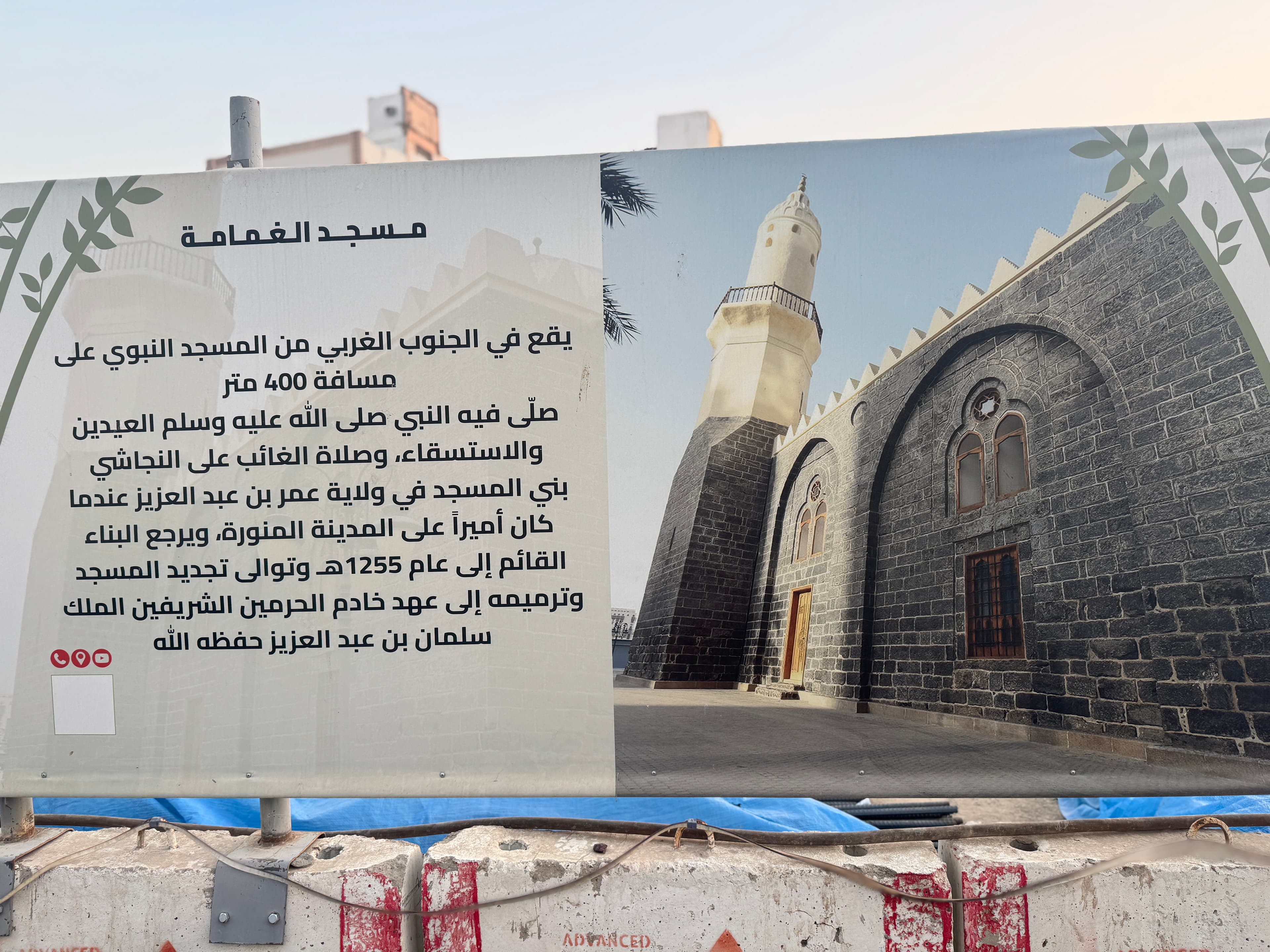
Masjid al-Ghamama Located near Masjid an-Nabawi, this mosque marks a spot associated with the Prophet ﷺ performing Eid prayers. It is a smaller, quieter stop often included in guided ziyarat tours of central Madinah.
Etiquette for Ziyarat
- Ziyarat is a means of reflection and reminder, not a ritual with prescribed actions — there is no requirement to touch structures, walls, or graves
- Maintain the same standard of modesty and respectful behaviour expected throughout your journey
- Photography is restricted or discouraged at several sites, particularly cemeteries — always follow posted guidance and your group leader's instructions
- Some sites have specific, limited visiting hours, particularly Jannat al-Baqi and Jannat al-Mu'alla — confirm current timing with your group leader before planning a visit
- Physically demanding sites such as Jabal al-Nour and Jabal Thawr are optional and should be approached cautiously by elderly pilgrims or those with health concerns
Planning Your Ziyarat Visits
Most standard and luxury Umrah packages include an organised ziyarat tour with a knowledgeable guide, which is generally the easiest and safest way to visit these sites, particularly given transport logistics and site-specific timing restrictions. If your package doesn't include this, ask your travel agent about arranging one separately.
Frequently Asked Questions
What are the main Ziyarat places in Madinah? The main sites are Masjid Quba, Mount Uhud, Masjid al-Qiblatain, Jannat al-Baqi, the Seven Mosques near the Trench site, and Masjid al-Ghamama. Full descriptions of each are listed above.
Is Ziyarat compulsory during Umrah or Hajj? No, Ziyarat is not a ritual obligation. It is a widely practised, recommended activity that adds historical and spiritual context to the journey, but the core obligations of Umrah and Hajj do not depend on it.
Can I take photos at Ziyarat sites? Photography is restricted or discouraged at several sites, especially cemeteries like Jannat al-Baqi. Always follow posted signage and your group leader's guidance at each specific site.